
Business Casual vs. Business Professional: What's the Difference?
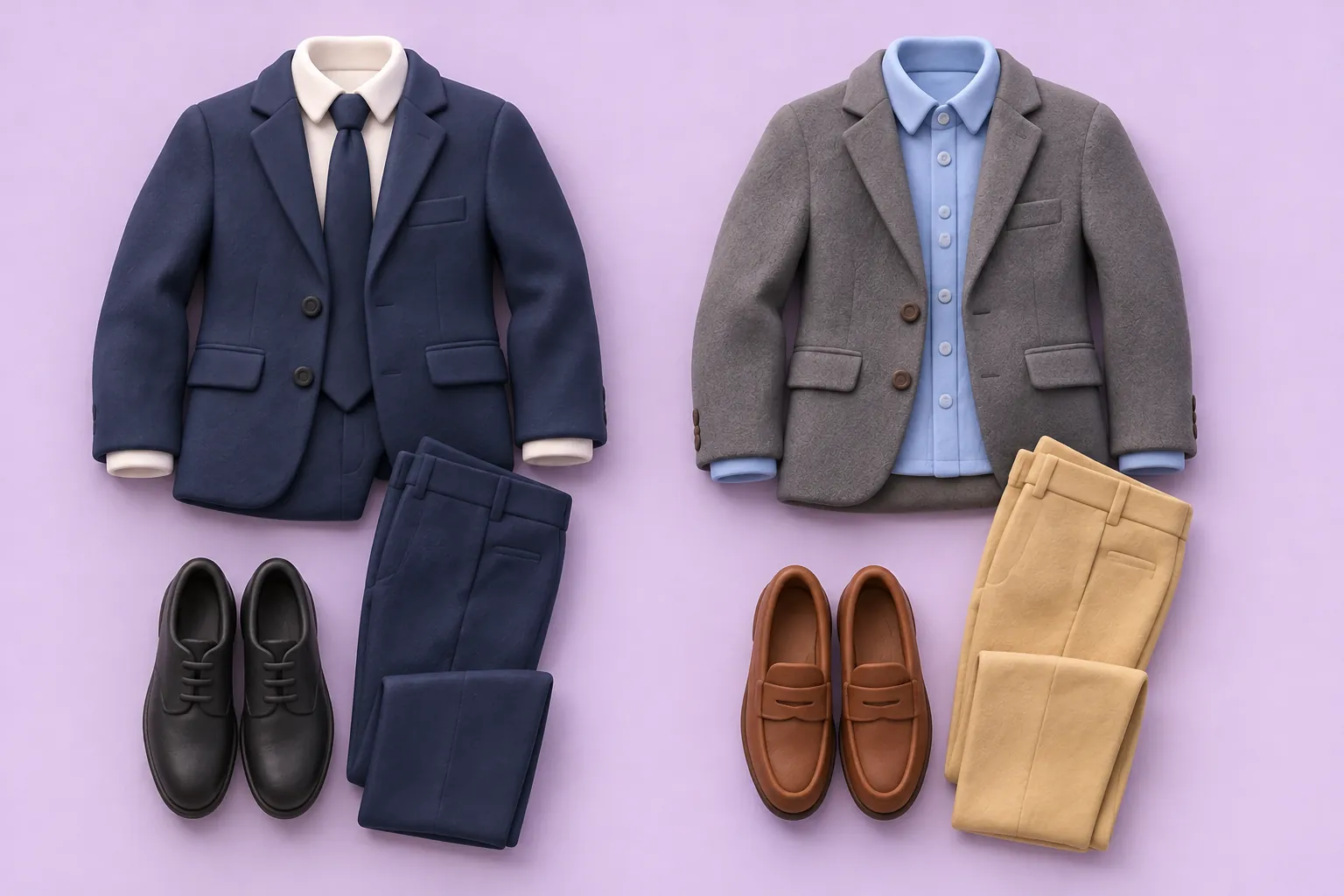
Business professional typically means a full matching suit, and business casual leaves out the full suit. The suit is the real dividing line, not the jacket, because several university career offices allow a jacket in business casual. This is guidance from the career offices and etiquette publisher named here, not a rule, and workplaces vary.
The University of Tennessee's career center says business professional is usually worn to interviews, career fairs and some networking events, and that some industries and companies wear one or the other for everyday work. Its lists for students supply most of this table.
| Garment | Business professional | Business casual |
|---|---|---|
| Jacket | Part of the matching suit, typically a neutral like black, navy or gray | A blazer, sport coat or cardigan, which Winthrop University calls optional |
| Bottoms | Part of the matching suit | Neutral slacks or a skirt |
| Top | White or light-blue dress shirt | Dress shirt, blouse or turtleneck |
| Tie | Solid dark color or simple pattern | Optional, say UNC Charlotte and Winthrop |
| Shoes | Formal, low-heeled shoes | Flats or loafers |
Treat the colors, top, tie and shoes as Tennessee's picks, not a checklist, because other lists differ. Winthrop's business professional list includes a blouse, and UNC Charlotte's lists closed-toe heels or dress shoes and doesn't mention a tie. UNC Charlotte also lists a dress under both codes, with a jacket for business professional.
The etiquette publisher Emily Post's attire guide says casual business attire "generally means slacks, khakis, or a skirt with a dress shirt, blouse or polo".
You may also see "business formal," which the guide ties to "a suit jacket with matching pants or a skirt". It doesn't say whether that's the same as business professional, but either way the suit is the place to start.
Jeans and sneakers: usually no, with exceptions
Every source here that covers jeans and sneakers starts from no for business casual, so skip them until you know your workplace is fine with them.
Two career offices leave no opening: UNC Charlotte's says no jeans and to avoid athletic shoes, and Winthrop's counts out flip-flops and tennis shoes for both codes.
Emily Post leaves an opening: jeans are "usually a no," but clean, neat ones might work somewhere relaxed. Sneakers are "usually a no-go," though plenty of more casual places are fine with a pair in good shape that isn't too showy.
Employers can set their own answer. The New York City Law Department's posted business casual policy, for its own attorneys and professional staff who deal with clients and visitors, doesn't permit "conventional blue jeans" or sneakers, but its suggestions include dark denim slacks.
The line moves between workplaces
Emily Post treats business casual as a small move down from whatever's normal where you are.
The University of North Georgia's career services shows how that plays out. An outfit that's business professional at a nonprofit or software company might only be business casual at an accounting firm. Where business professional means nice pants or skirts and no suits, business casual "could be khakis and a polo or a casual skirt".
Where business professional does mean a suit, North Georgia says business casual "may be dress pants or skirts without the jacket or tie (for men)". If your workplace draws the line there and you own one suit, you may already have both looks.
If you're not sure
Ask. Emily Post is clear that asking about a dress policy is always fine, and the career pages at UNC Charlotte and Winthrop say a call to Human Resources is OK too.
If there's no one to ask, go with the more formal look. Tennessee's career center tells its students to wear business professional whenever they're in doubt, and North Georgia's advice for a vague code is to overdress your first week and watch the people around you to learn what the company expects.
Once you know what your workplace expects, the closet is the next job. Ezfit, coming soon to iPhone and Android, will have an AI stylist that answers with outfits made only from clothes you own, and you'll be able to save a work look you like.
Sources
- Professional Clothing Options | Division of Student Success, University of Tennessee, Knoxville, Division of Student Success
- Professional Attire, Winthrop University, Center for Career Development and Internships, Last Updated: 8/7/26
- Professional Attire | Career Center, UNC Charlotte Career Center
- Business Professional vs. Business Casual, University of North Georgia, Career Services
- Attire Guide: Dress Codes from Casual to White Tie Formal, The Emily Post Institute
- Dress Code - Entry Class, New York City Law Department
- Business Casual 101: Everything You Need to Know, The Emily Post Institute
- Ezfit home page: AI stylist and Outfits and looks sections, Ezfit