
How to Do a Seasonal Closet Swap and Store Clothes So They Last
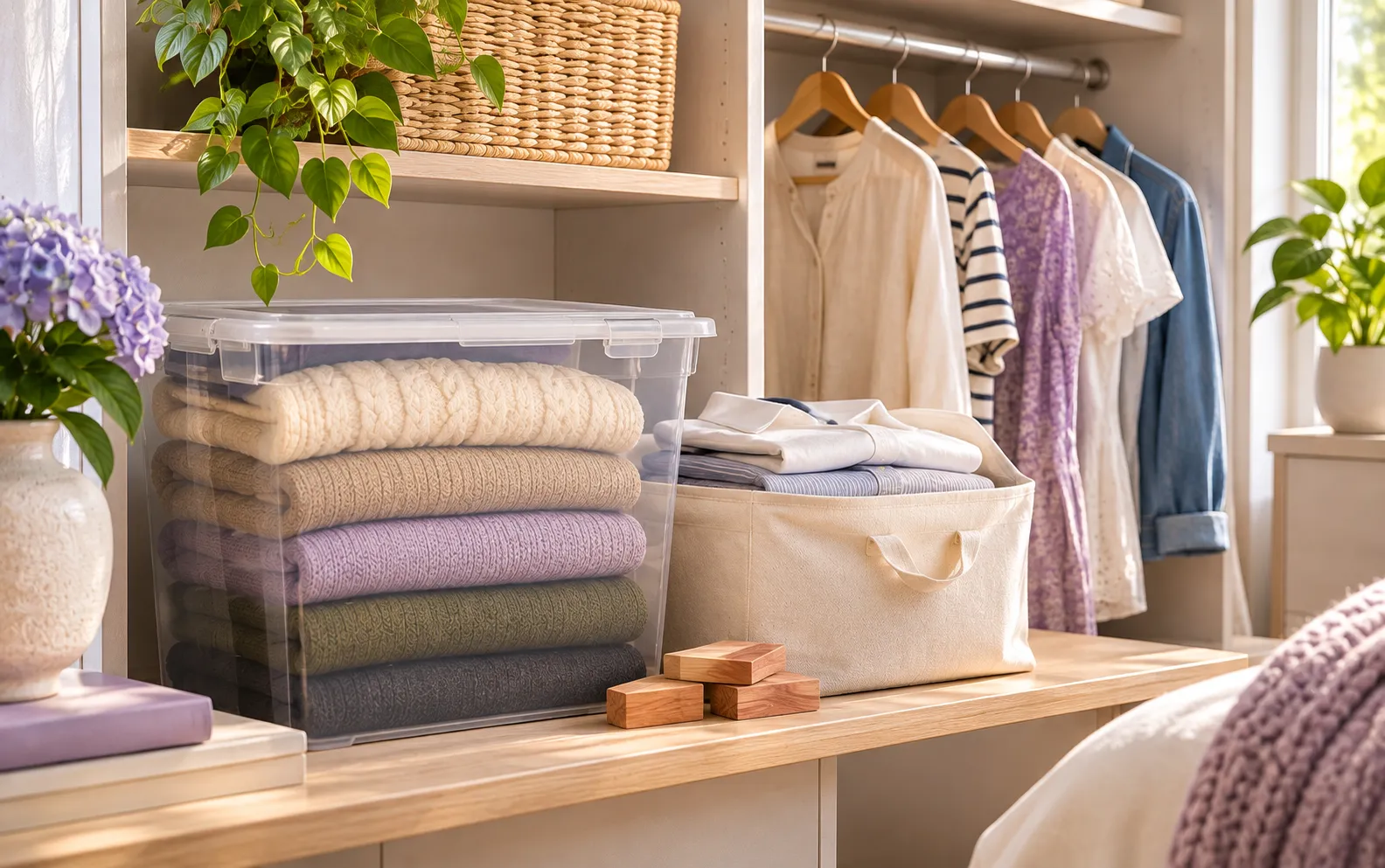
Switch your closet over in order. Take everything out, sort it into keep, fix and pass on, then wash the off-season pieces and let them dry completely before you pack them. Skip plastic bags, store everything somewhere cool, dark, dry and well ventilated rather than the attic, basement or garage, and check on it partway through the season so you catch any moth problem while it's small.
What to have ready
You may not need to buy anything. Most of it is probably in your home already:
- room to spread out, like a bed or a clear patch of floor
- three bags or boxes marked keep, fix and pass on
- boxes, cloth bags or pillowcases, and an airtight bin or a tightly built chest for wool
- white tissue paper, a clean sheet or old pillowcases
- a needle, thread and a few spare buttons
- a drying rack or some free hangers for airing things out
Pick a dry day if you can, because you'll be airing clothes out before you pack them.
Step 1: Empty the closet and sort
Take out everything from the season that's ending, plus anything you haven't touched in a while. Going piece by piece is slower than glancing along the closet rod, but it's how you notice the loose button, the mark on a cuff or the sweater you forgot you had.
Then make three piles:
- Keep the pieces you wore and would happily wear again next year.
- Put anything you'd wear if it weren't for a loose hem, a missing button or a stuck zipper in the fix pile.
- Put what you haven't reached for, and don't expect to, in the pass-on pile.
For the pieces you didn't wear, ask why before you decide. If nothing went with it, try it with two or three things you already own. You might find an outfit you hadn't thought of. If you just don't like it anymore, that's an answer too.
If the pass-on pile grows, you're in good company, at least in the UK. In 2022, WRAP, a UK nonprofit that works on waste and resources, published research based on a survey of 6,000 UK adults. It found the average adult had 118 items of clothing, and about a quarter of them (26 percent, or 31 items) hadn't been worn for at least a year.
Last, split the keep pile in two: what goes into storage now and what stays out. Year-round basics and a couple of in-between layers can stay put, so a warm week in November or a cold one in April doesn't send you digging through a bin.
Step 2: Fix it before you pack it
Before anything goes into storage, check it for sagging hems, missing buttons, broken zippers, tears and split seams, and make the repairs now so it's ready to wear when its season comes back. That's the University of Kentucky extension service's advice for summer clothes. It works just as well for winter things in spring.
Sewing a button back on or closing a short split seam takes a few minutes. A broken zipper or a long tear may be a job for a tailor. If a repair isn't worth it to you, move the piece to the pass-on pile, where someone else may be glad to mend it.
Shoes and boots get the same treatment. Clean and repair them before they go away.
Step 3: Wash everything that's going into storage
Wash or dry-clean each piece before you pack it, even if it looks clean. Clothes can carry stains you can't see yet, which might cause permanent discoloration, and dirt and stains attract insects. Give swimsuits and anything that touched sunscreen a closer look.
For wool, clean matters even more. Clothes moth larvae feed on wool clothing, furs and stored woolen items, and on cotton or synthetic blends that also contain wool. Fabrics with food or sweat stains are more prone to damage. A wool sweater with a small food spot near the cuff is exactly the kind of piece to wash before it goes away.
Skip a few usual laundry steps for anything headed into storage. Leave out starch, fabric softener and fabric sizing, which can draw silverfish and crickets and help mildew and mold grow. And put the iron away, because ironing might set a stain that didn't fully wash out.
Step 4: Let everything dry completely
Pack only clothes that are completely dry, so mildew and mold don't get a start in storage. That includes anything back from the dry cleaner. Letting clothes air overnight gives trapped moisture time to evaporate, so hang them on a rack or over the back of a chair in the evening and pack them in the morning.
Step 5: Pack it
Choosing a container: tight bin or breathable bag?
Start with the easy part. Plastic bags are out, because they hold moisture and that can lead to mildew.
For wool and anything else moths go for, the University of California's Integrated Pest Management program (UC IPM) advises packing items clean and pest free in an airtight container, and says a tightly built chest matters more than the type of wood. Kentucky's extension service, in its release on storing summer clothes, names a cool closet or an airtight chest as the best place, and in the same breath warns against plastic bags.
The one real difference is air. Another Kentucky release, on winter clothes, says natural fibers such as wool and cotton need to breathe, and suggests white tissue paper, cloth bags, a clean sheet or pillowcases.
Here's one way to use both. If moths are your main worry, as they are with wool, put those pieces in an airtight bin or a tightly built chest, but only once they're clean and completely dry. You can wrap them in tissue paper or a clean sheet inside if you like. Pieces you're less worried about can go in cloth bags or pillowcases.
However you store them, fold pieces neatly. Put the heaviest ones at the bottom and don't overfill the container. A label on each box or bin saves you opening the wrong one at the next swap.
Shoes and boots
Leather needs air, so keep shoes and boots in their original cardboard box, an old pillowcase or another container that breathes. A tightly sealed plastic box can let mildew and mold grow on leather.
Cedar and moth balls
Cedar often comes up as a moth fix, but UC IPM calls the effectiveness of cedar chests and cedar closet floors debatable. Cedar oil can kill small clothes moth larvae but not large ones, and cedar loses that quality after several years.
UC IPM warns that moth balls, flakes and crystals are toxic, so if you use them, keep them away from children and pets. Kentucky's release on winter clothes adds to always read and follow the manufacturer's instructions.
Step 6: Store it somewhere cool, dark and dry
Put your bins or bags somewhere cool, dark, dry and well ventilated. Skip the attic, basement and garage, which can get very damp, hot or sunny and leave clothes open to grease and fumes. Inside your living space, a cool closet works well.
Wherever it goes, keep it out of the light, since light over time might fade bright colors.
Step 7: Check on it partway through the season
UC IPM advises checking fabrics and closets regularly for moths and the damage they do, so you can act while a problem is still small. One easy habit is to open your storage at least once around the middle of the season, say in January for summer clothes packed in the fall, or in July for winter clothes packed in spring.
Lift a few pieces out and look for signs of moth damage: silken tubes in hidden parts of clothes, such as under collars, along with silken mats or patches, fibers that look grazed on the surface, and holes. Check for any damp or musty smell too. If you find damage, or moths or larvae, deal with those pieces now rather than at the next swap. For how to clean affected pieces, see UC IPM's clothes moth guide, and check each piece's care label before you start.
What to do with the pass-on pile
Passing on clothes that still have wear in them keeps them in use, and that's worth a little effort. Don't count on recycling to catch them later. In the US, EPA estimates that only 13 percent of textiles in clothing and footwear were recycled in 2018, the year its textile figures cover.
Pieces in good shape can go to a thrift store or donation center, or you can sell them. For anything too worn for that, check what your local textile recycling drop-off or clothing donation bin accepts before you take a bag. And put the bag by the front door the same day, so it doesn't drift back into the closet.
Ezfit, a wardrobe app coming soon to iPhone and Android, is being made for this part of the job. Once it's out, it will point out a few pieces you haven't worn in a while, each with a reason. For pieces you've stopped wearing, it will suggest restyle, alteration or repair ideas, find nearby charity shops, secondhand shops and clothes banks, and write a resale listing with an estimated price range for you to check.
When the new season's clothes come out
Give the clothes you're bringing out a once-over too. Air them, look for damage and wash anything that smells musty before you wear it.
If you'd like to know at the next swap what you actually wore, hang everything with the hook facing backward and turn the hanger around the first time you wear the piece. The hangers that never turned show you where to start sorting.
From here, washing goes back to being a weekly question. For how many wears a piece can take between washes, see how to plan a week of outfits around the weather and your laundry.
When the seasons turn again, unpack what you stored and run the same steps on the clothes you're putting away.
Sources
- Successfully Storing Summer Clothes (Word document), University of Kentucky Cooperative Extension Service (news release)
- Making the Most of Your Clothing Investment: Clothing Storage (CT-LMH.062) (PDF), University of Kentucky Cooperative Extension Service, Family & Consumer Sciences, 1/02
- Tips to Properly Store Winter Clothes (Word document), University of Kentucky Cooperative Extension Service (news release)
- Pest Notes: Clothes Moths (UC ANR Publication 7435), University of California Statewide Integrated Pest Management Program (UC IPM), UC Agriculture and Natural Resources, Updated: 03/2013
- Nation's wardrobes hold 1.6 billion items of unworn clothes* People open to new ways of shopping, WRAP, 7 October 2022
- Textiles: Material-Specific Data, US Environmental Protection Agency, Last updated on March 19, 2026 (data year 2018)
- Ezfit home page: 'Laundry and donations' section, Ezfit
- Ezfit home page: 'Second life' section, Ezfit